
Courses for Teachers
Intro to T1D
(type one diabetes)

Learn what diabetes is, how it's managed, and how you can support your students with T1D
Handwashing
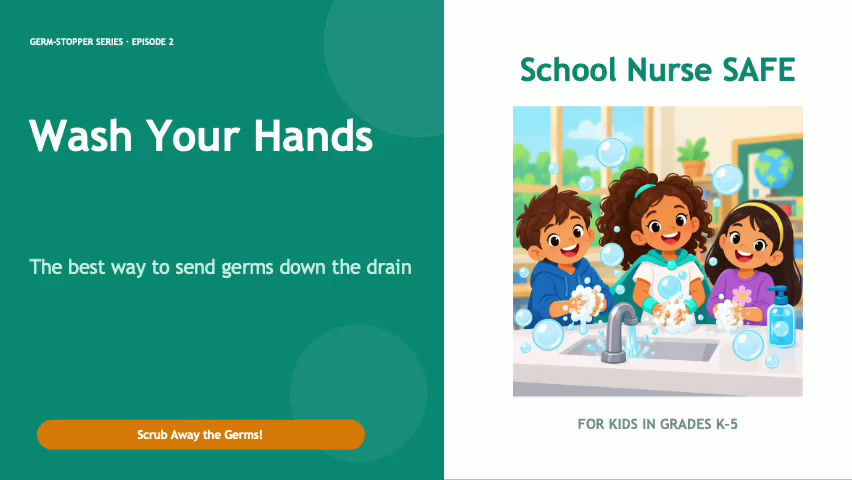
Episode 2 of our Germ-Stopper Series teaches kids the five steps to clean hands (wet, soap, scrub, rinse, dry), when to wash, and why soap beats sanitizer. It's a 3-minute video for K–5 classrooms with a built-in Germ Detective discussion.
Unexpected highs and lows

Blood sugar depends on much more than food and insulin. This 18-minute video explains, in plain language, the hidden things that can push a student’s blood sugar up or down during the school day. It also covers what teachers can do to help: follow the plan, never send a possible low alone, and share what you notice with the nurse. No medical background needed.

Lice

If you've ever spotted a child scratching and felt your stomach drop — this one's for you. Head lice a common (and dreaded) occurance at camp and after school programs. The panic the adults feel cause is completely understandable. This short video cuts through the anxiety with clear, current guidance on what to look for, how to handle it discreetly, and why the response is probably calmer than you think.
Cough Covering

Episode 3 of our Germ-Stopper Series teaches kids three simple steps for every cough and sneeze: catch it, toss it, wash it. Kids learn why sneezing into your hands spreads germs, how to use your elbow when there’s no tissue, and why we each use our own water bottle. It’s a 4-minute video for K–5 classrooms with a built-in Germ Detective discussion.
Germs 101

What are germs, and how do they spread? This 3-minute video for grades K–5 explains germs in kid-friendly language and shows the three ways they travel: hands, coughs and sneezes, and things we share. Includes a "Germ Detective" pause for classroom discussion.
My Classmate has T1D (type one diabetes

My Classmate Has Type 1 Diabetes is a short video for K–5 classrooms that helps kids understand what type 1 diabetes is and how to be a great friend to a classmate who has it. In kid-friendly language, students learn what insulin does, why their classmate checks blood sugar, what the beeps, phones, and snacks are for, and what to do if a friend feels low: stay with them and call a grown-up over. It’s an 5-minute video with true-or-false and “What would you do?” moments for class discussion